
To say goodbye to the holidays is to say goodbye to the beach, to nap, to stay up late, to not have schedules, to not think about what we do not like, to return to the every day routine … But it is also to meet your house once again, your bed, your favorite corner … and with someone who was been looking forward to your return: plants! In my case this was the greatest joy of «the return». I had thought about them and my irrigation system frequently from my exile while on vacation and there they were faithfully waiting for me at home and keeping alive.
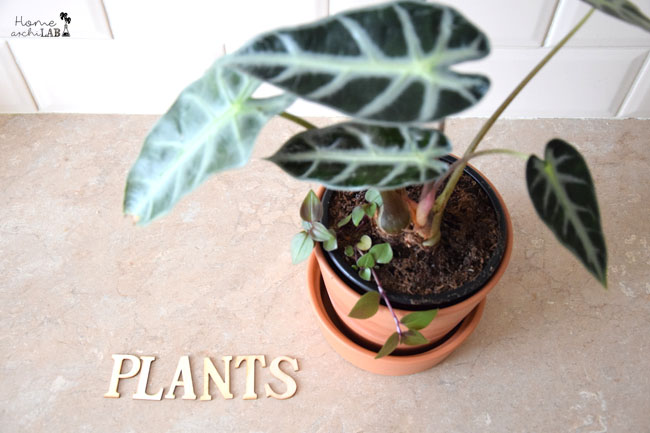
Photo: ©Home archiLAB
You will remember that at the beginning of summer I decided to try the self-irrigation system with ceramic cones for the holiday period and you can know more here: How to water the plants on holidays
Since I know that many of you found the topic interesting I will tell you if it worked, advantages, disadvantages and everything that I would have liked to know at the time.
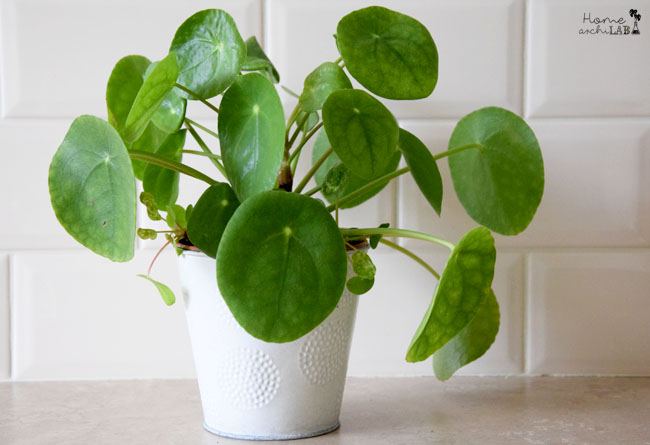
Photo: ©Home archiLAB
The first thing I have to say is that I am quite satisfied with the result because the vast majority of my plants were alive!
As I told you in that post, I did a test before I left, to calculate how much water each plant needed. This resulted in quantities that determined the size of bottle that each needed, but in this process I discovered:
1- The smaller plants were soaked with water, therefore, it is not a system suitable for plants in pots smaller than 10 cm despite the fact that the product is for pots smaller than 25 cm.
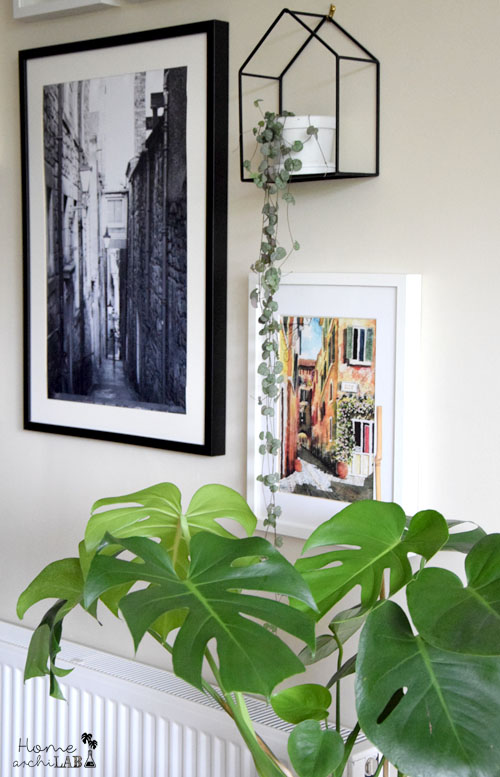
Photo: ©Home archiLAB
From this experience my fear turned to if the plants would have an excess of water, instead of lack of it.
2- The soil is moistened a long time after finishing the water, so this must be taken into account when calculating the amount of water and the days that the self-irrigation system has to cover.
This led me to the decision to put bottles of smaller amounts than those required, generally 500 ml knowing that the water would be finished long before I returned home.
It is also true that a month is a long time so I had the help of a great friend who went home twice in that period to check that everything was going well (and to water the smaller ones that had no bottle).
3- I advise this system for a period of 15-20 days maximum.
At that time it is the first time my friend went home and almost all the bottles were already empty. Many of them were still wet, so for 15 days the system works. For more days you could put larger volume bottles, 1.5 L for example, but depending on the substrate and how fast they absorb, you can end up drowning the plant.
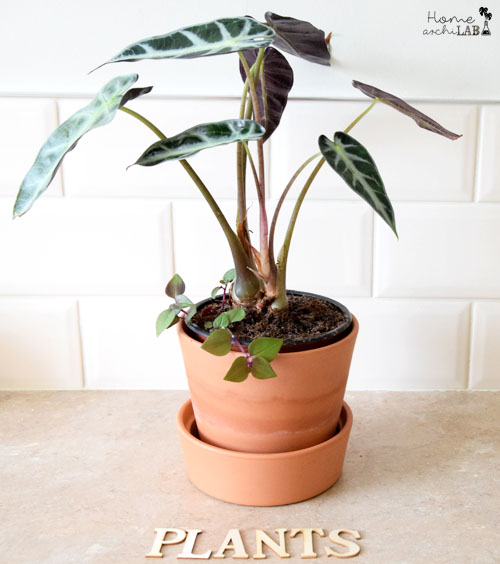
Photo: ©Home archiLAB
Another important decision is where to place the plants.
This is an issue that affects the day-to-day, not just on vacation. But it can be the case that in your day to day you control the sun with awnings or blinds depending on the time and on vacation do not count on this factor.
4- Avoid leaving the plants in a location with direct sun because they can burn the leaves.
Even plants that tolerate direct sun exposure can suffer burns if they receive it through the window panes, since they have a magnifying effect.
Equally important is:
5- Allow light to enter the room where the plant is.
If you are someone who closes the house to lime and chant when you leave, first beware of the message you give to thieves, letting them know clearly that you are not in and second, gather all the plants in a single room and at least in this room let some light in by not lowering the blind.
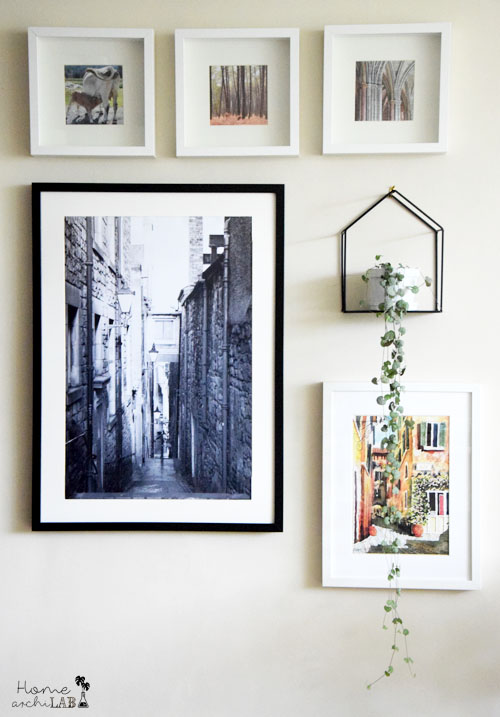
Photo: ©Home archiLAB
So, when I came back home after a month away, my plants were generally in fairly good condition, as you can see in the photos I show you throughout the post.
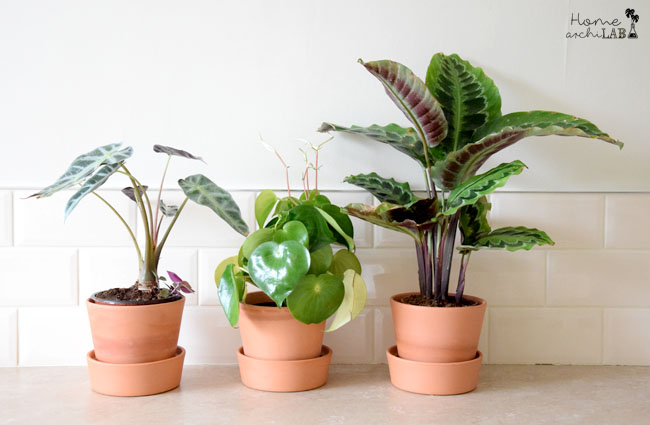
Photo: ©Home archiLAB
Even many of them had quite a few more leaves, new shoots and small shoots.
. 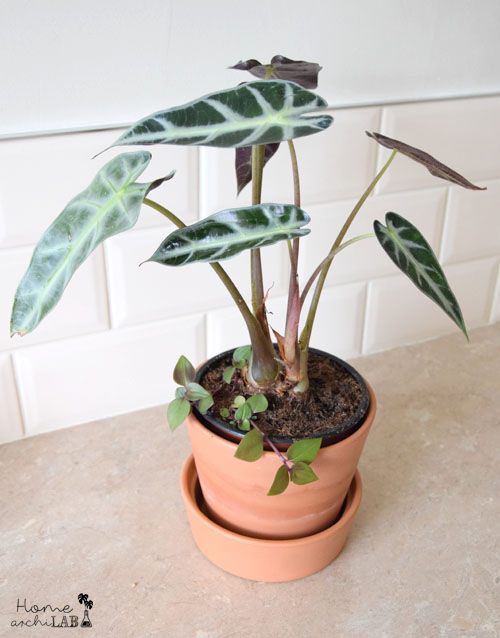
Photo: ©Home archiLAB
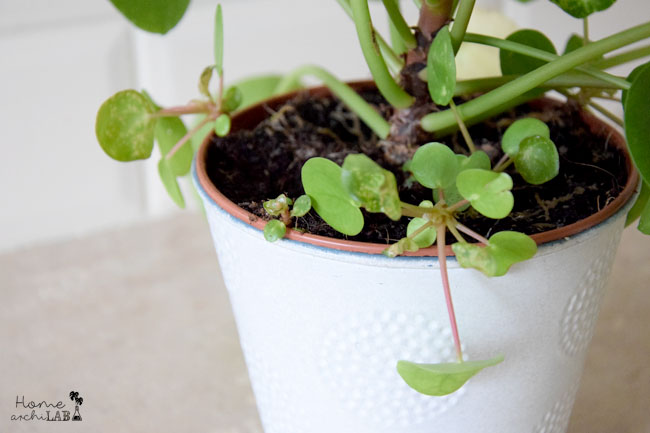
Photo: ©Home archiLAB
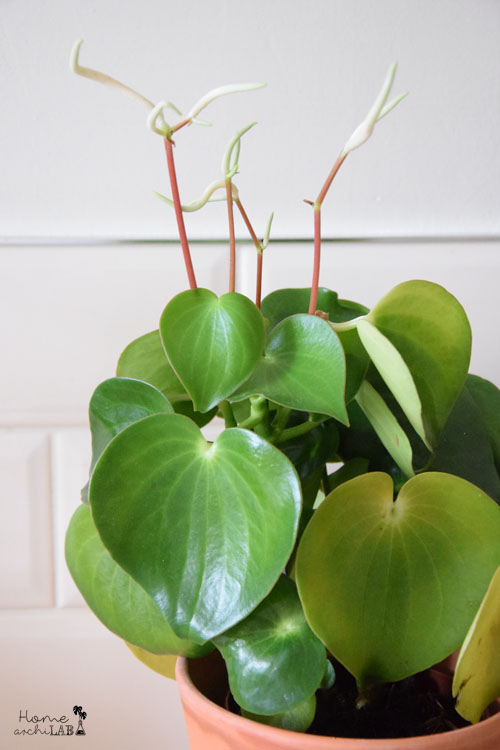
Photo: ©Home archiLAB
Also there were flowers in the geranium !!
I do not know about you but seeing flowers blossom from one of my plants causes me a feeling of enormous enthusiasm and happiness.
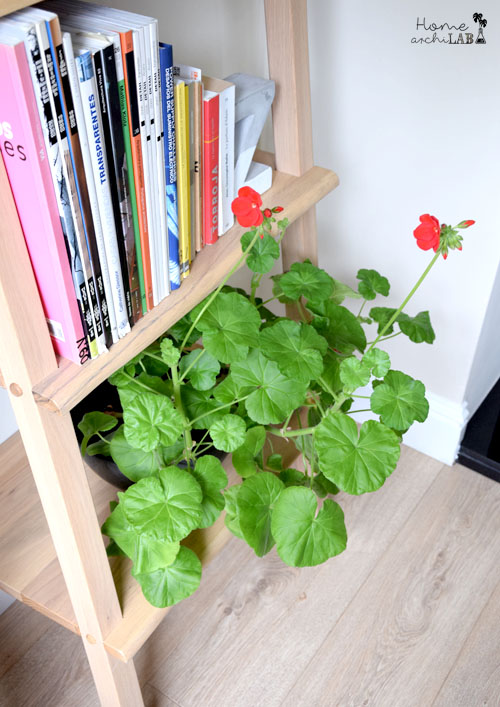
Photo: ©Home archiLAB
The vines and ivy had doubled in size. Look how the ivy on the shelf already touches the floor. I do not know what I’m going to do with it!
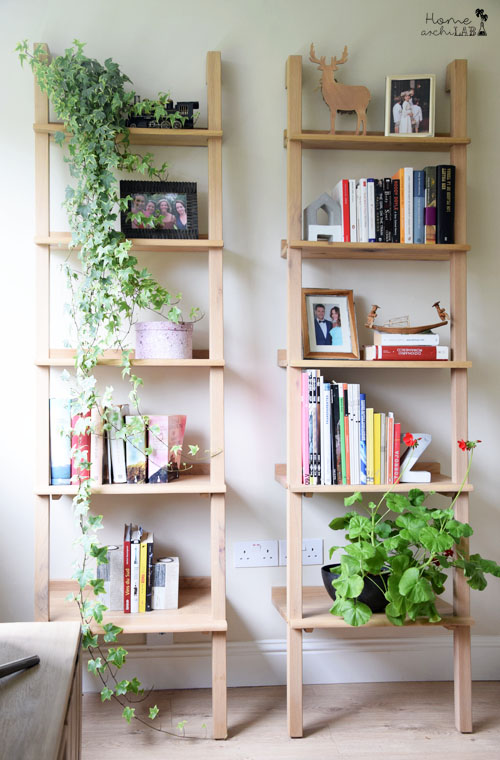 Photo: ©Home archiLAB
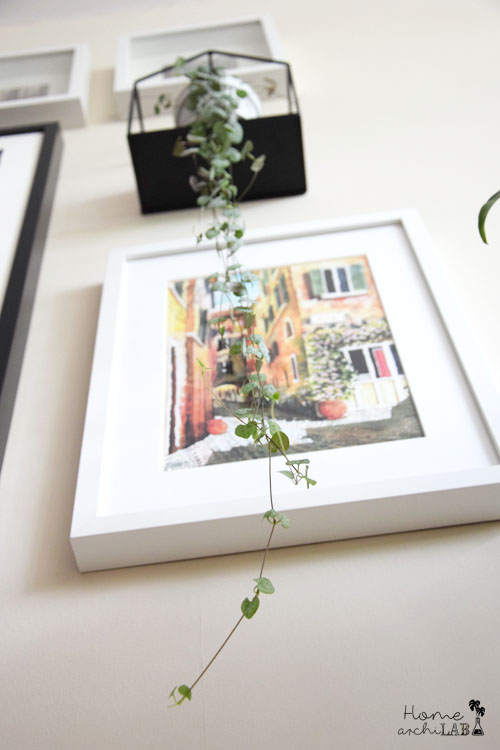
Photo: ©Home archiLAB
The monstera has taken my absence phenomenally well and has no symptoms of dryness. In addition it has also doubled its size, it is scary to see how fast it grows.
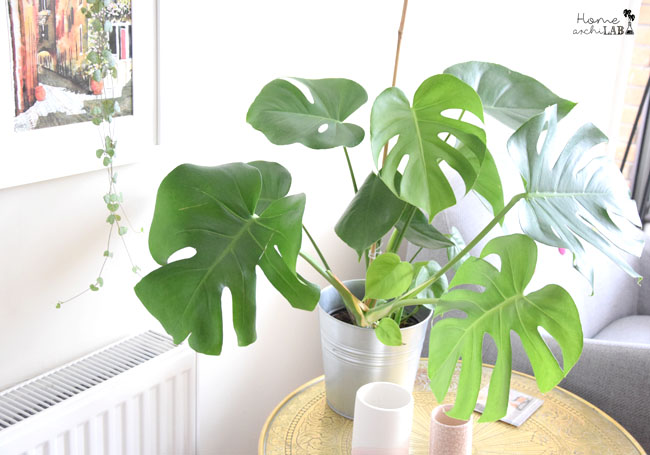
Photo: ©Home archiLAB
In the following photo you can see how it was a month before:
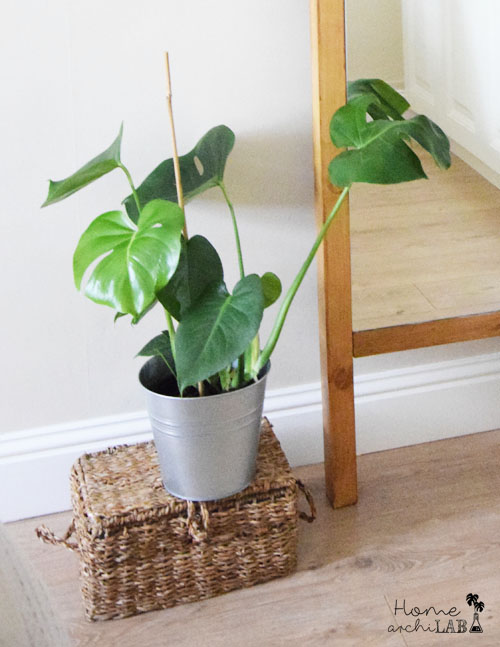
Photo: ©Home archiLAB
But everything is not going to be wonderful, a few problems did appear. For example: dryness in some parts of the leaves, especially in the edges.
This happened in the Calatea, the Alocasia and slightly in the Croton (it is frequent in plants with big leaves).
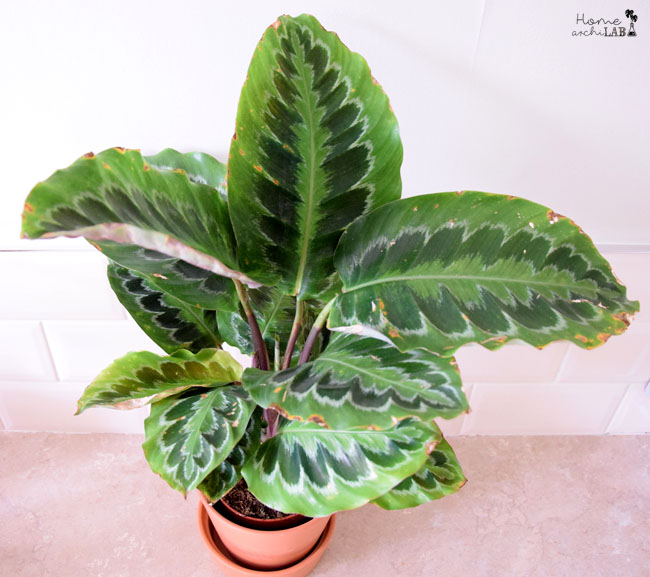
Photo: ©Home archiLAB
There are three possible causes of this problem: lack of water, excess water and excessive sun.
HOW DO YOU KNOW IF A PLANT HAS EXCESS OR LACK OF WATER?
Lack of water:
- The leaves lose their brightness, they have a dull color.
- The tips or edges dry.
- Curl.
- Yellow.
- They fall or stay straight.
Excess of water:
- The leaves turn yellow first.
- Subsequently, they fall.
- It is possible to see rot in the stem.
Most likely in my case is that it happened because of lack of water but it is certain that some of the plants still had the earth wet when I arrived. Even so the dry part was located in the tips and edges and in the Alocasia you can see lack of luster.
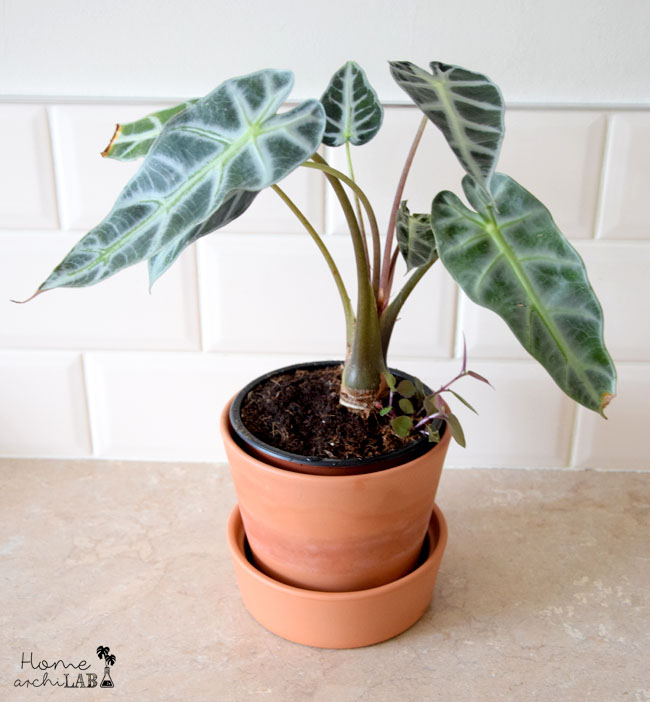
Photo: ©Home archiLAB
Another possibility would be the excess of sun (unbelievable this to happen in Dublin) but I left these plants on the windowsill, relying on the Irish overcast and it could be the case that a few moments that the sun did come out, it burnt the leaves.
DRY EDGE SOLUTION
To eliminate damages, remove the affected parts, because the tissue does not regenerate.
On the large leaves I cut the damaged area with scissors. If the stain is very extensive it would have to cut the entire leaf. In the case of small and numerous leaves cut the most affected stems leaving only about 5 cm from the base.
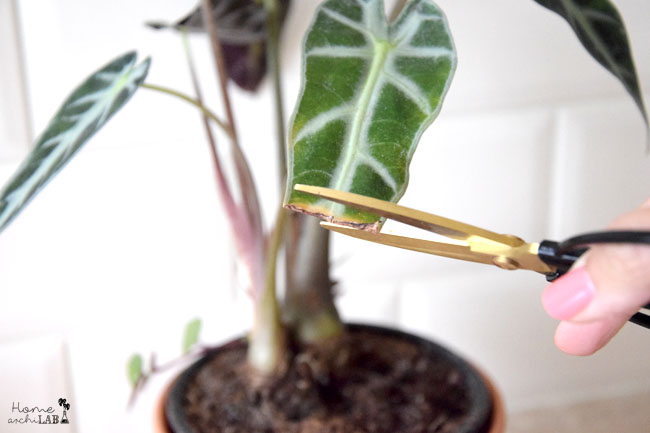
Alocasia. Foto: ©Home archiLAB
In addition there were two plants that did not survive the holidays: parsley and some margaritas. Both were stiffer than dried fish. That’s life!
A survival rate of 16 out of 18 is not bad, which makes the irrigation system with cones a recommendable solution. But, if you use it, buy the smaller of the sizes because it is linked to the porosity that has and is directly proportional to the amount of water it releases.
I hope it has helped you and tell me your experience if you have ever used them.


