
A few weeks ago I proposed in a post a list of 5 EASY TO CARE PLANTS and their basic needs, and I told you that I would expand the list shortly. And for that comes this week’s publication, to recommend other 5 more resistant indoor plants that are easy to care for and the basics you need to know about them. In addition I will tell you what is the Guide «How to take care of your plants» of Nika Vintage
Vintage that I consider very interesting for beginners. In it you will learn in a very simple and clear way the basics that you have to know to have them beautiful.
In my previous post I gave you some basic guidelines to take care of your plants based on my own experience. The most important thing is to look at them from time to time so they can tell you what they need. But if you want to refresh the memory here you can reread it.
In addition I also gave you a list of 5 indoor plants resistant and very easy to care but if none of them fit or you do not find it in your florist I will give you 5 more that do not require much effort:
EUPHORBIA LEUCODENDRON
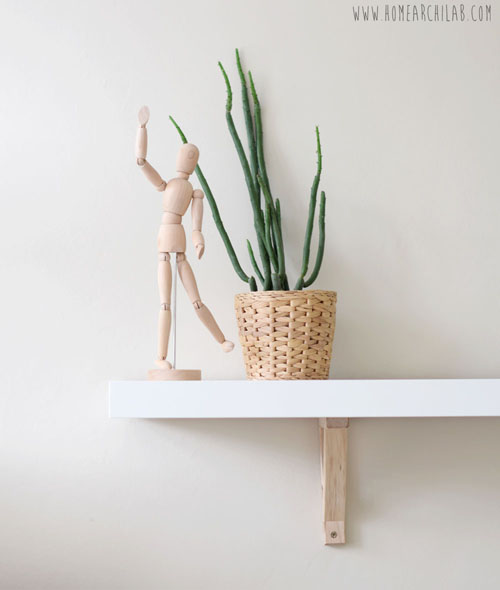 Photo: © Home archiLAB
It is a very peculiar succulent with vertical cylindrical ramifications for what is also known as milk pencil bush. It grows vertically and its appearance is like green pencils stuck in the ground. It has its origin in Madagascar and other areas of Africa.
WATERING: It is a moderate watering plant. Especially in winter, it is advisable that the substrate remains dry. You should not keep the roots moist.
LIGHT: Needs a lot of light and to be able to be direct sun, although it can tolerate a certain shadow.
ENVIRONMENT: It is quite tolerant although it is advised to keep it warm and moist while growing (spring and summer), and fresher and drier when they are inactive.
OTHER ADVICE: Caution should be taken with the milky sap inside the stems because it is toxic and can cause skin irritation and eye contact. Make your pruning with gloves and do not place it in areas where the continuous friction can cause its breakage. In order to nourish it, it uses fertilizers for cactus and succulents rich in potassium.
CEROPEGIA WOODII
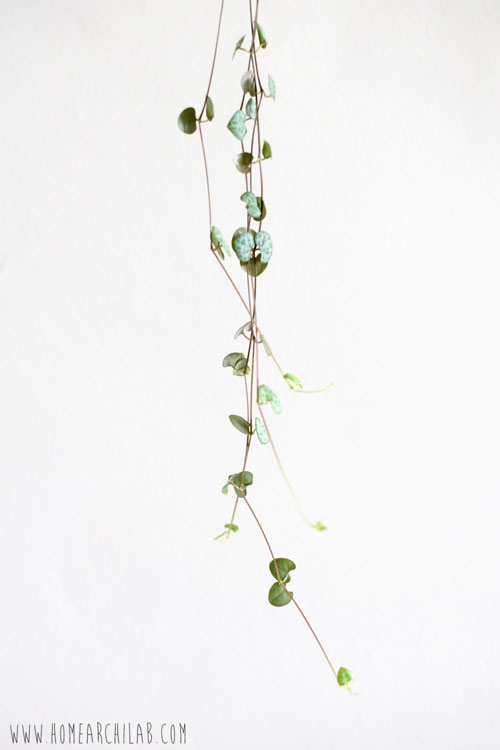 Photo: © Home archiLAB
The ceropegia or rosary vine belongs also to the family of succulents that are so fashionable. It is a pendant and its rounded leaves are shaped like small hearts that acquire pink tones upon contact with light. Its ungainly form in the form of a curtain offers interesting decorative applications placing it in a high place.
WATERING: Its tuberous roots cause the plant to create its own water reserves and therefore tolerates scarcity. It is recommended that you let the substrate dry completely before re-watering it.
LIGHT: It prefers sunny and luminous places but it can grow in semi-shade. Avoid placing it in a very dark place with lack of light.
ENVIRONMENT: Being a succulent, it tolerates very well the dry environment that can occur with heating. It is not necessary to spray it.
OTHER ADVICE: It must be fertilized once every three months during the year except in the growth period (spring and summer) that should be done monthly.
In addition to plants that I have myself, I will recommend three more that I know well that are easy to care plants.
I would do with them without hesitation, but to think that in less than a year they will have to face a change of country to which I do not know if they will survive, it has made me reflect and decide that I will not buy more until we return to Spain.
After … the revenge will be terrible!
POTHOS
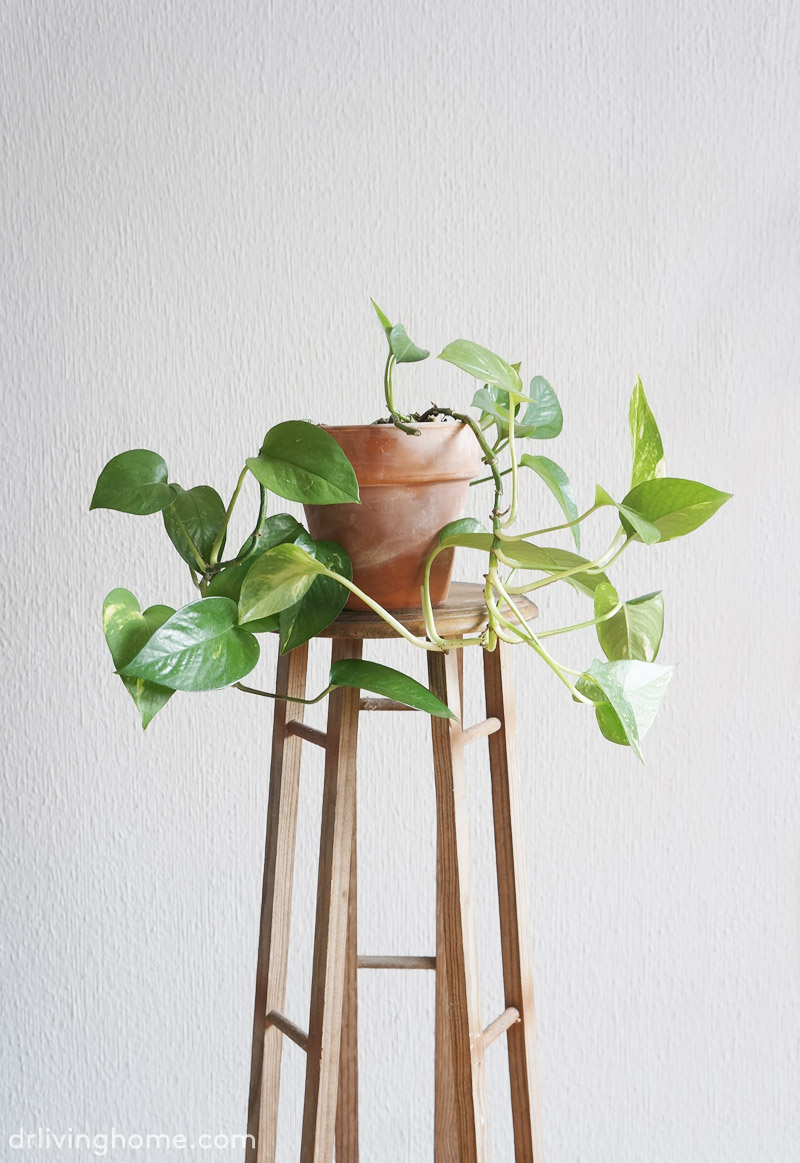
Photo: Dr. Livinghome
This widely known vine is also one of the easiest to care for. It looks great as a hanging plant with its sinuous shapes.
WATERING: The waterings have to be moderate since an excess of watering causes the yellowing of the leaves and their subsequent fall. Let the earth dry between waterings.
LIGHT: Place in a well-lit place but without direct light, so that it maintains the contrast of its leaves. Requires light sifted through a curtain.
ENVIRONMENT: To achieve that the leaves reach their final size, they require very high humidity conditions. to get it, spray your leaves frequently and with warm water. It does not tolerate temperatures below 10 degrees, so it is only used indoors.
OTHER ADVICE: With lack of light, the pot loses the lower leaves and develops long and weak stems that grow in search of light. If this happens, you can make cuttings of the tips to re-plant them in the pot.
ASPIDISTRA
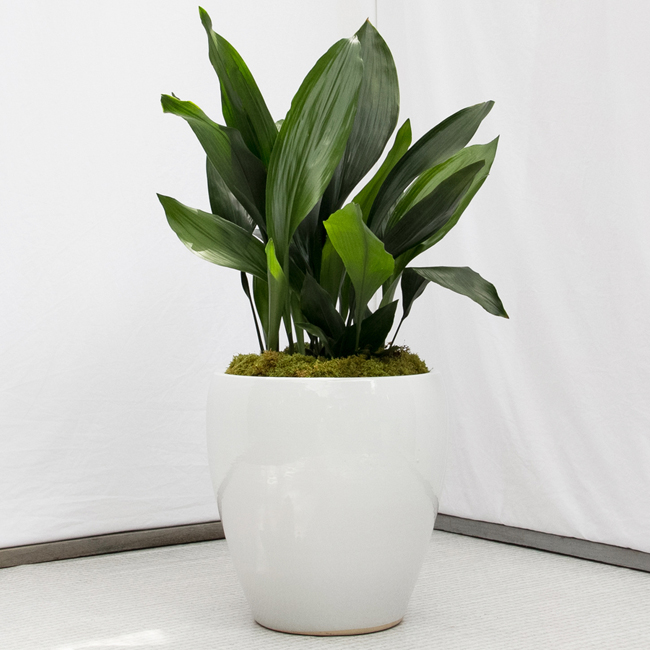
Photo: McArdle’s
What characterizes the Aspidistra is its reduced demand for light, which allows it to be placed in corners, bathrooms without windows and corridors where other plants would not resist. It reminds me of childhood since my grandparents had a lot of huge Aspidistras in a shady corner of their backyard. I remember them there for years and years.
WATERING: It is a moderate watering plant, especially in winter, which is advisable to reduce it.
LIGHT: Scarce demand of luminosity, which means you can place it in locations where other plants would not survive.
ENVIRONMENT: It has no special requirements.
OTHER ADVICE: It is a very slow growing plant so the contribution of fertilizer is very restricted to the summer months (when there is more watering). It should be pruned at ground level if it is badly damaged.
CINTA O MALAMADRE
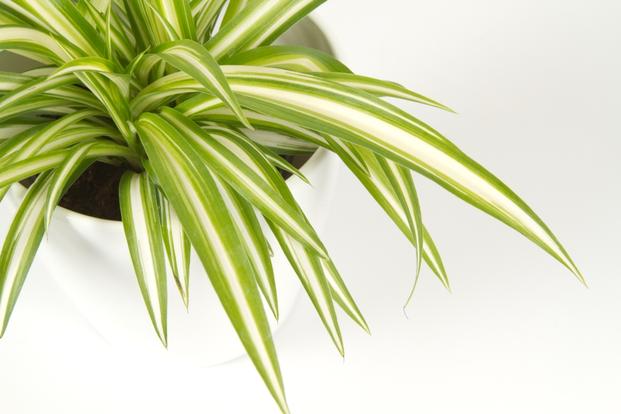
Photo: Wymarzonyogrod
I finish the list with the Cinta or Malamadre, which is one of the most common and easy-to-care indoor species.
WATERING: Cintas tolerate drought and do not die if watering is forgotten, since they store water in the roots. Scarce watering is highly recommended.
LIGHT: Tolerates dark places well, but you can lose the white band of leaves in the dark. The most suitable location will be next to a window.
ENVIRONMENT: It needs some moisture so that the edges of the leaves do not turn brown. In summer, spray several times a day. The regions that do not descend from -2ºC are a suitable option for the exterior.
Guide «How to take care of your plants» by Nika Vintage
If you really want to start having plants and you need to learn basic things about them, I recommend Verónica Pérez’s Guide (or Nika Vintage in the digital world) in which she starts you in this exciting world in a visual and entertaining way.
The Guide is in PDF format and has 42 very easy pages to read, with beautiful photographs made by herself.
What will you find in the Nika Guide?
First you will find a classification of types of plants and then a very simple explanation to understand how they work and what they need to live.
The most interesting thing from my point of view comes next, where you will find very useful tips on basic care for initiates.
In this section, the Guide talks about light, watering, fertilization, pruning and pest control.
It also covers the subject of pots and substrates and gives very practical advice on what to use if you are a beginner and do not want to fail.
All this for me was a great help at the time of starting with my little plants.
Once you have the main notions clear, Nika speaks in her guide of the particularities of cacti and orchids since they are very frequent species that are kept at home and are becoming more fashionable every day. Both species are very peculiar so it is necessary to know what they need to survive, where to locate them, how to water them, etc.
To put the cherry on top, the Guide gives a list of 8 plants that are easy care and what you need to know about them. I advance you that 5 of those 8 plants recommended by Nika Vintage are not in my recommended 10 so with all of them you will have already prepared a list of 15 easy to care plants and what their needs are.
For me, reading this guide has meant confirming those things that I already did well with my plants and also discovering a whole set of new tricks and tips that make me feel much more secure now. The plans are happier and more beautiful for it.
The Guide costs only € 9.60 and you can buy it on their website: Buy the Guide «How to take care of your plants» by Nika Vintage.
With all this information you have no excuses to start having plants and you can be sure that your beginner’s logo will be gone.
Keeping your plants healthy is easier than it seems if you have the correct information and gardening, even if it is very basic, is very pleasant and grateful.
I encourage you to start, because I’m sure you want to create a cozy and beautiful home and our green friends in that are essential.


